
Gym Space Utilization Explained: How Data Helps Fitness Facilities Maximize Every Square Foot
Introduction
Every square foot inside a gym represents potential value.
Without accurate data, many gyms guess about where to put equipment, how to design their space, or when to hold classes.
This often leads to common problems:
- Overcrowded strength areas
- Underused functional training zones
- Long wait times for equipment
- Poorly allocated floor space
Understanding gym space utilization helps operators solve these problems using real operational data instead of guesswork. It also shows how data helps fitness facilities make smarter, more efficient decisions.
With modern gym operations intelligence platforms, operators can see how members use different areas of their gym. This helps them improve layouts for a better member experience and more income.
Gym space utilization refers to how effectively different areas of a fitness facility are used over time.
It measures:
- Which areas members use most
- When certain zones are busiest
- Which equipment sits idle
- How traffic flows through the facility
Instead of checking the gym floor by hand, operators can use technology like computer vision and AI to automatically see how people use the gym.
Learn more about how this works with Computer Vision for Gyms.
Why Gym Space Utilization Matters
Gym layouts have a direct impact on member satisfaction, retention, and operational efficiency.
Many facilities unknowingly lose revenue because of inefficient space allocation.
For example:
- An oversized cardio area may remain half empty during peak hours.
- Strength equipment might become overcrowded.
- Functional zones may be underused due to poor placement.
Space analytics helps solve these issues by providing data-driven insights into real member behavior.
This is especially important for operators focused on member retention, which we covered in our guide to
👉 Why Gym Member Retention Matters More Than Acquisition.
See How Your Gym Space Is Really Performing
The Key Metrics Behind Gym Space Utilization
Modern fitness business intelligence platforms provide detailed utilization insights across your facility.
Here are the most important metrics gym operators should track.
Facility-Wide Utilization Dashboard
A facility-wide utilization dashboard gives operators a high-level overview of how their gym space is performing.
Instead of relying on observation, operators can see clear utilization percentages across every major area of the gym.
This helps identify:
- Overcrowded zones
- Underused areas
- Space imbalance across the floor
Using tools like Space Utilization Analytics, operators can quickly identify opportunities to improve facility layout and performance.
Category-Level Performance Tracking
Not all areas of a gym perform the same.
Operators can analyze utilization across major space categories such as:
- Cardio equipment
- Strength training areas
- Functional fitness zones
- Group training areas
- Free weight zones
Comparing category performance helps operators understand where demand is strongest and where adjustments are needed.
Daily Utilization Trends
Space usage can fluctuate dramatically depending on the day.
Daily trend tracking helps answer questions like:
- Do Mondays have heavier strength usage?
- Are weekends dominated by cardio activity?
- Do functional areas spike during certain class schedules?
Tracking daily utilization trends allows operators to adjust programming and staffing accordingly.
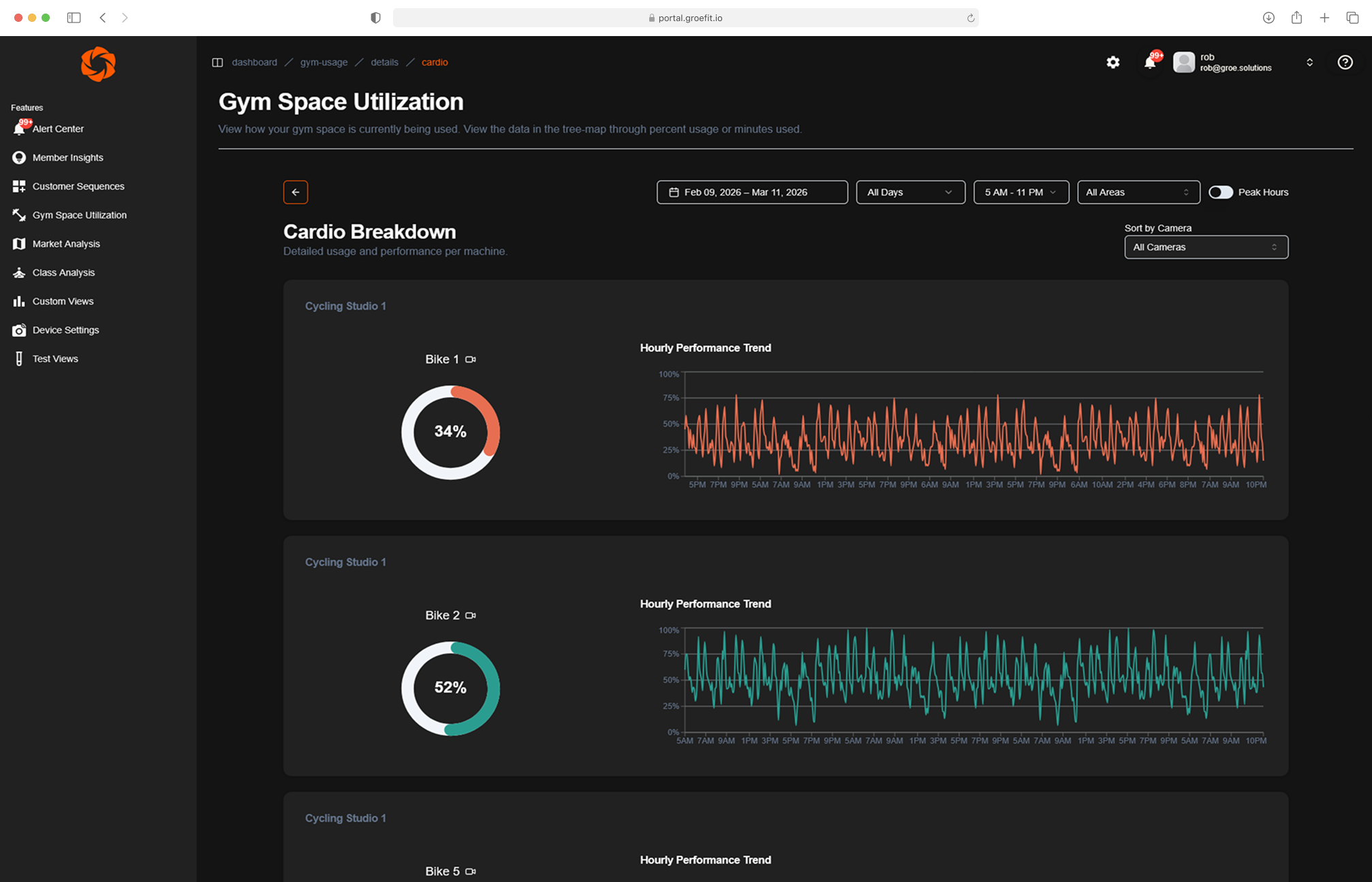
Zone and Equipment Drill-Downs
High-level data is helpful, but the most powerful insights come from drilling into individual zones and equipment.
Operators can analyze:
- Individual squat racks
- Dumbbell areas
- Functional rigs
- Cardio machines
This level of detail helps identify exactly which assets are driving traffic and which are underperforming.
Hourly Performance Visibility
Understanding hour-by-hour usage patterns is critical for optimizing gym operations.
With hourly performance insights, operators can:
- Schedule classes at the right times
- Reduce peak-hour congestion
- Improve equipment distribution
- Adjust staffing coverage
Combined with AI Analytics for Multi-Location Gyms, operators can compare hourly patterns across locations to identify operational best practices.
Learn more about how AI improves gym operations with
👉 Predictive Analytics.
Peak Hour Insights
Peak hours often determine whether members enjoy their experience or leave frustrated.
Using a Peak Hours Smart Filter, operators can focus on the busiest windows of the day.
This enables gyms to:
- Optimize traffic flow
- Reduce equipment wait times
- Improve floor management
- Maintain a positive member experience
Addressing overcrowding is one of the most effective ways to prevent member churn.
Camera-Level Segmentation and Zone Validation
Advanced analytics platforms allow operators to analyze utilization based on specific monitored areas.
This includes:
- Camera-level segmentation
- Zone overlay validation
- Visual confirmation of monitored areas
These tools ensure that the utilization data accurately maps to real physical gym spaces, providing reliable operational insights.
How Gym Space Utilization Drives Revenue
Space utilization analytics doesn’t just improve operations — it directly impacts profitability.
Here’s how.
Maximize Revenue Per Square Foot
Every gym has areas that generate more value than others.
By identifying high-performing zones, operators can expand or replicate those areas to increase revenue potential.
At the same time, low-performing zones can be repurposed to support higher-value activities.
Protect Capacity Before It Becomes a Problem
Overcrowding can damage the member experience and drive cancellations.
Utilization analytics helps operators identify bottlenecks before they become a retention issue.
This is a key component of Gym Operations Intelligence, which brings together operational data and member insights.
See how unified data supports better decision-making with
👉 Unified Operations and Member Data.
Improve Labor Efficiency
Staff scheduling should align with real member traffic patterns.
Space utilization data allows operators to:
- Increase staff during peak hours
- Reduce unnecessary coverage during slow periods
- Optimize trainer availability
This ensures payroll spending matches operational demand.
Turn Floor Data Into Strategic Decisions
Perhaps the biggest benefit of utilization analytics is turning raw operational data into strategic decisions.
With reliable utilization insights, operators can confidently make decisions such as:
- Purchasing new equipment
- Expanding facilities
- Adjusting membership pricing tiers
- Adding new training programs
Instead of relying on assumptions, gym leaders can make decisions based on real member behavior and facility performance.
The Future of Gym Operations Intelligence
The fitness industry is becoming increasingly data-driven.
Forward-thinking operators are investing in Gym Data Platforms and Fitness Business Intelligence tools to gain deeper visibility into how their facilities operate.
Combined with AI analytics and computer vision, these technologies allow gyms to:
- Improve member experience
- Increase operational efficiency
- Reduce churn
- Maximize facility ROI
In the future, the most successful fitness operators will be those who turn gym floor data into strategic business insights.
Final Thoughts
Gym space utilization is no longer something operators should estimate or guess.
With modern Gym Operations Intelligence tools, facilities can monitor utilization across every zone, identify inefficiencies, and optimize their layouts for maximum performance.
By understanding how members truly use your space, you can create better experiences, improve retention, and maximize the value of every square foot.