
How AI Can Reduce Gym Membership Churn

Introduction
Member churn is one of the biggest challenges gym operators face.
While most gyms invest heavily in marketing and member acquisition, long-term profitability depends on retaining members for as long as possible.
Even a small improvement in retention can significantly impact revenue because gym memberships generate recurring income.
However, identifying when members are about to cancel has traditionally been difficult.
This is where AI-powered analytics is transforming gym operations.
By analyzing member behavior, attendance patterns, and facility usage, AI can detect early signs of disengagement and help gyms intervene before cancellations happen.
What Is Gym Membership Churn?
Gym membership churn refers to the rate at which members cancel or stop renewing their memberships.
High churn rates create several problems for fitness operators:
- Lost recurring revenue
- Increased marketing costs
- Higher pressure on sales teams
- Lower lifetime member value
Many gyms unknowingly accept churn as a normal part of the business. But with modern analytics, churn can be predicted and reduced.
We explored the importance of retention in our article:
➤ Why Gym Member Retention Matters More Than Acquisition
Why Traditional Retention Strategies Fall Short
Historically, gyms relied on simple methods to manage retention.
These methods included:
- monitoring attendance manually
- checking billing activity
- surveying members occasionally
- reacting when members stop showing up
The problem with these approaches is that they are reactive rather than proactive.
By the time a member has completely disengaged, it may already be too late to prevent cancellation.
AI allows gyms to move from reactive retention strategies to predictive retention strategies.
How AI Predicts Gym Membership Churn
AI systems analyze large volumes of operational data to identify patterns that humans may miss.
These systems evaluate signals such as:
- attendance frequency
- visit duration
- class participation
- facility usage patterns
- peak-hour behavior
- engagement history
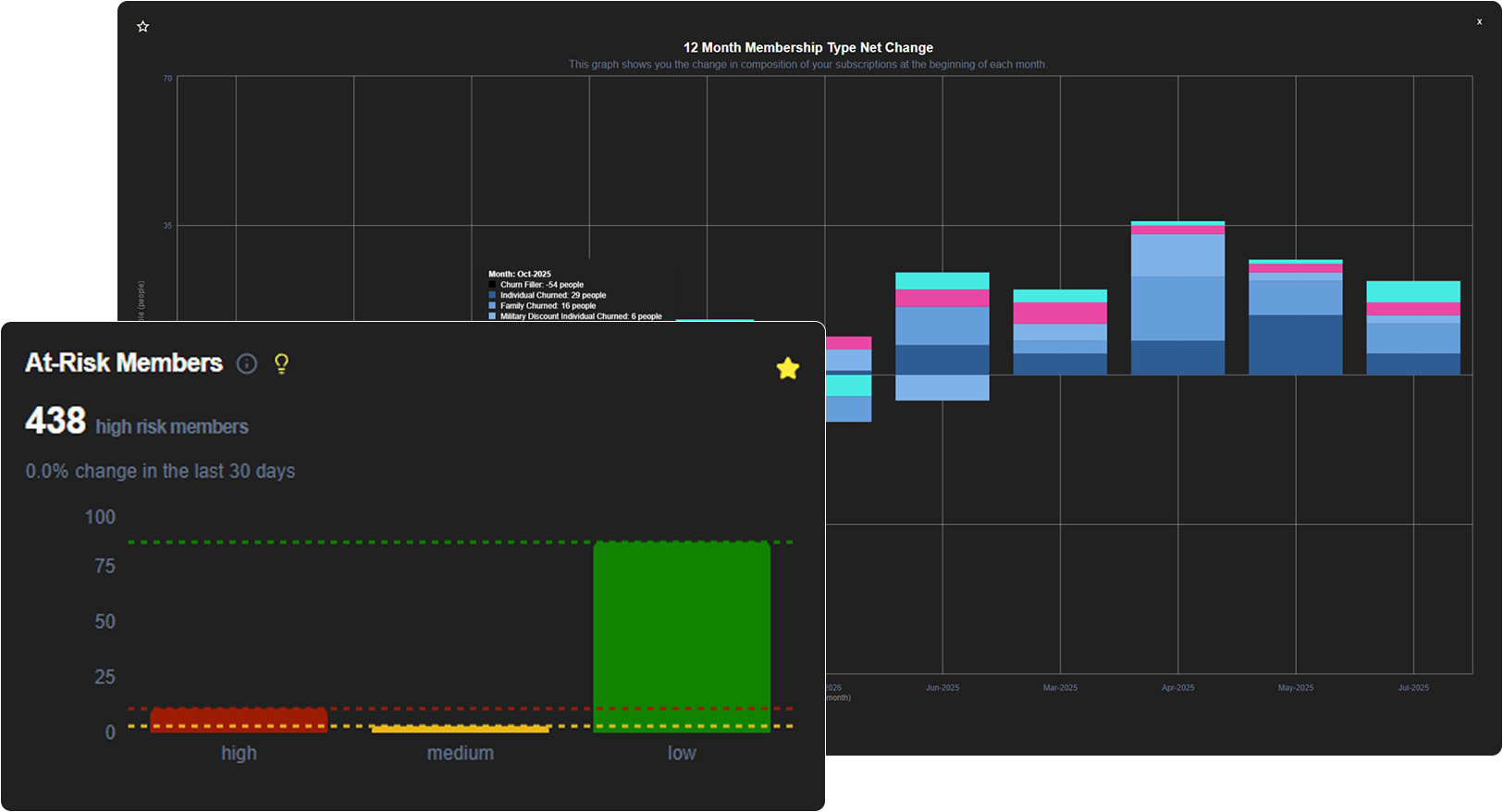
By combining these signals, AI models can generate risk scores that predict which members are most likely to cancel.
This allows gyms to focus retention efforts on the members who need attention the most.
To see how predictive insights work in practice, explore:
Use AI to Reduce Gym Membership Churn
Behavioral Signals That Indicate Churn Risk
Several common patterns often appear before a member cancels their membership.
Declining Attendance
A steady decline in gym visits is one of the strongest predictors of churn.
For example:
- a member who previously visited 4 times per week may drop to once per week
- a regular morning attendee may stop visiting during their usual time
AI can detect these changes early and flag them for intervention.
Reduced Facility Engagement
Attendance alone doesn't tell the full story.
Members may still visit the gym but engage with fewer areas or activities.
Examples include:
- shorter workout sessions
- fewer zone transitions
- reduced equipment usage
Facility analytics such as gym space utilization insights can help reveal these patterns.
We explored this concept in:
➤ Gym Space Utilization Explained
Frustration With Overcrowding
Overcrowded zones can quietly drive churn.
Members who regularly encounter:
- long equipment wait times
- congested weight areas
- limited class availability
may reduce their visits or cancel their memberships entirely.
Monitoring facility traffic patterns helps operators detect and fix these problems.
➤ Learn how gyms analyze usage patterns
Poor Early Engagement
Many cancellations occur within the first few months after joining.
New members who fail to establish a routine are significantly more likely to leave.
AI can identify onboarding engagement patterns and flag members who may need additional support.
Multi-Location Behavior Changes
For multi-location gym operators, engagement patterns may vary between locations.
Without unified analytics, it can be difficult to detect declining engagement across facilities.
Platforms that combine operational and member data solve this problem.
➤ Learn how unified systems improve visibility
How Gyms Can Use AI Insights to Reduce Churn
Once AI identifies at-risk members, operators can take targeted action.
Personalized Outreach
Retention teams can reach out to at-risk members with:
- trainer check-ins
- personalized workout suggestions
- motivational reminders
- class invitations
Targeted engagement often helps members rebuild their routine.
Optimized Scheduling and Programming
If analytics reveal declining engagement in certain classes or zones, operators can adjust programming.
For example:
- changing class schedules
- adding new training formats
- introducing specialty programs
These adjustments help ensure offerings align with member demand.
Improved Facility Layout
Operational analytics may reveal that certain zones consistently create congestion.
By redistributing equipment or redesigning floor layouts, gyms can improve member flow and reduce frustration.
This is a key part of Gym Operations Intelligence, which turns facility data into operational improvements.
The Future of AI in Gym Retention
AI will likely play an increasingly important role in fitness operations over the next decade.
Instead of guessing why members leave, operators will rely on data-driven insights to predict and prevent churn.
AI-powered platforms can combine:
- member behavior analytics
- facility utilization data
- predictive modeling
- operational dashboards
Together, these tools provide a comprehensive understanding of how members interact with the gym.
The result is better decision-making, improved member experiences, and stronger long-term retention.
Final Thoughts
Gym membership churn has long been treated as an unavoidable part of the fitness business.
But AI is changing that reality.
By detecting early warning signs and predicting disengagement, AI analytics allows gyms to intervene before cancellations happen.
For fitness operators focused on long-term growth, AI-powered retention strategies may become one of the most valuable tools in modern gym management.